How a century-old island remedy is becoming the SAN Herbal Mask, backed by Thailand’s National Innovation Agency
Across the water from Songkhla’s old town, on the island of Koh Yor, one family still knows how to make paeng luk-on (แป้งลูกอ่อน). It is a herbal powder made from rice and local plants, and for more than a hundred years the method has been passed from parent to child rather than written down. That family is now the last one making it.
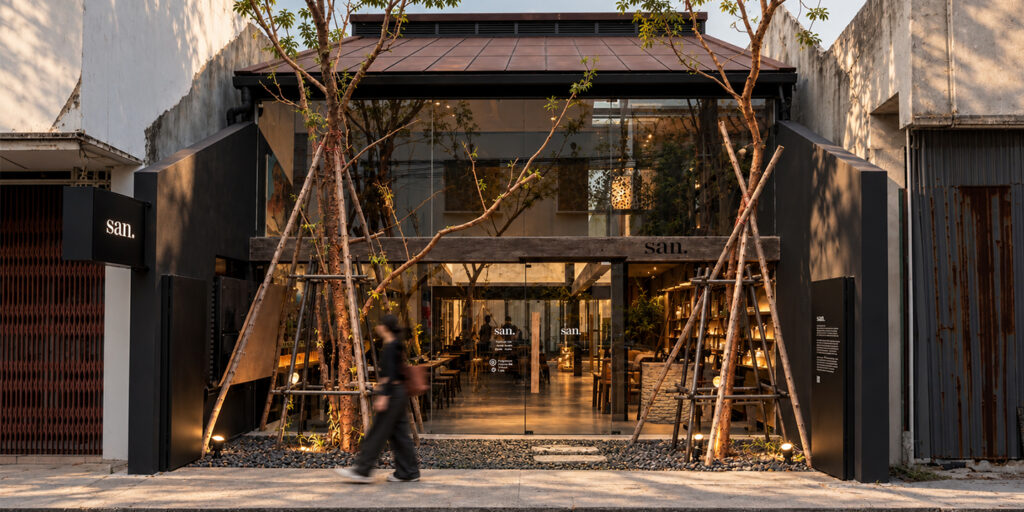
We’re proud to share that SAN Maison has been awarded a grant from the National Innovation Agency (NIA) to develop the SAN Herbal Mask, a contemporary facial mask based on this Koh Yor recipe. Over the next twelve months, we’ll work alongside the inheritor family to record the knowledge, refine the formula to modern standards, and bring it back into daily use.
Why heritage, and why now
SAN began with a simple belief: the culture of Southern Thailand is something you can carry with you, not just something you look at behind glass. Our scents come from specific places — the pine and sea air of Samila Beach, candle smoke and palm sugar from a Songkhla dessert stall, the incense of a Nora performance at dusk. Our design objects do the same. The Tupat sachet takes its shape from a festival rice parcel shared by Buddhist, Muslim and Chinese communities alike. The Scented Shadow Puppet carries the craft of Nang Talung into the home.
This idea guides everything we make: heritage survives when people still use it. A recipe that lives in one household’s memory is fragile. Give it a standard, a story and a place in everyday life, and it can last for generations.
The Luk-On mask project follows three steps:
- Preserve. Record the recipe, raw materials and methods directly from the inheritor family before the knowledge is lost.
- Innovate. Refine the formula with cosmetic science so every batch is consistent and safe, and give it a form that suits how people live now.
- Commercialise. Bring it to market through SAN’s stores and partners, so the recipe earns its keep and value flows back to Koh Yor.
A powder from the island
Koh Yor sits in Songkhla Lake, connected to the mainland by the Tinsulanonda Bridge. It is best known for its hand-woven pha thor Koh Yor cloth, its fishing villages and its orchards. Life on the island has always depended on what grows close by, and paeng luk-on reflects that.
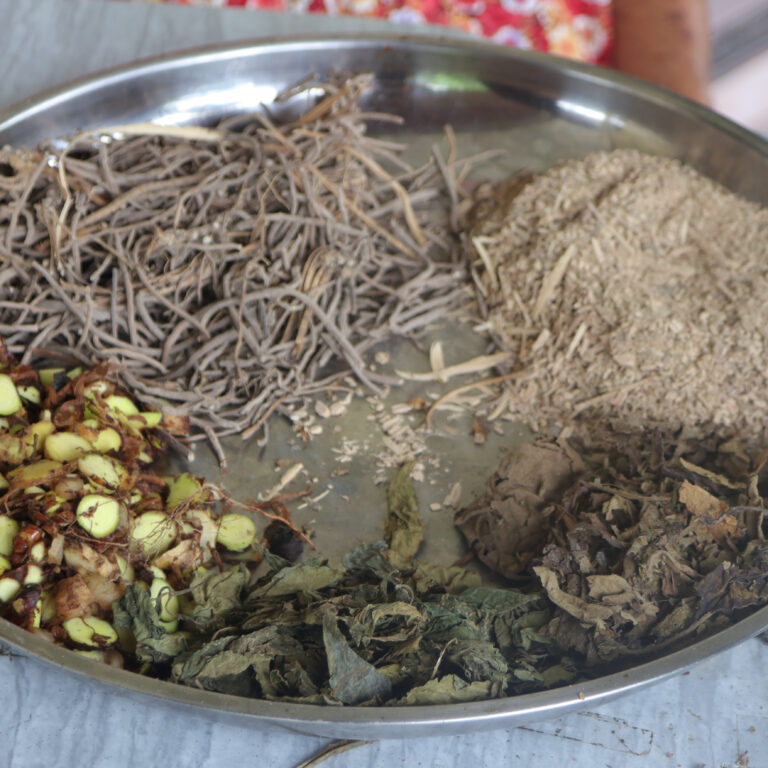
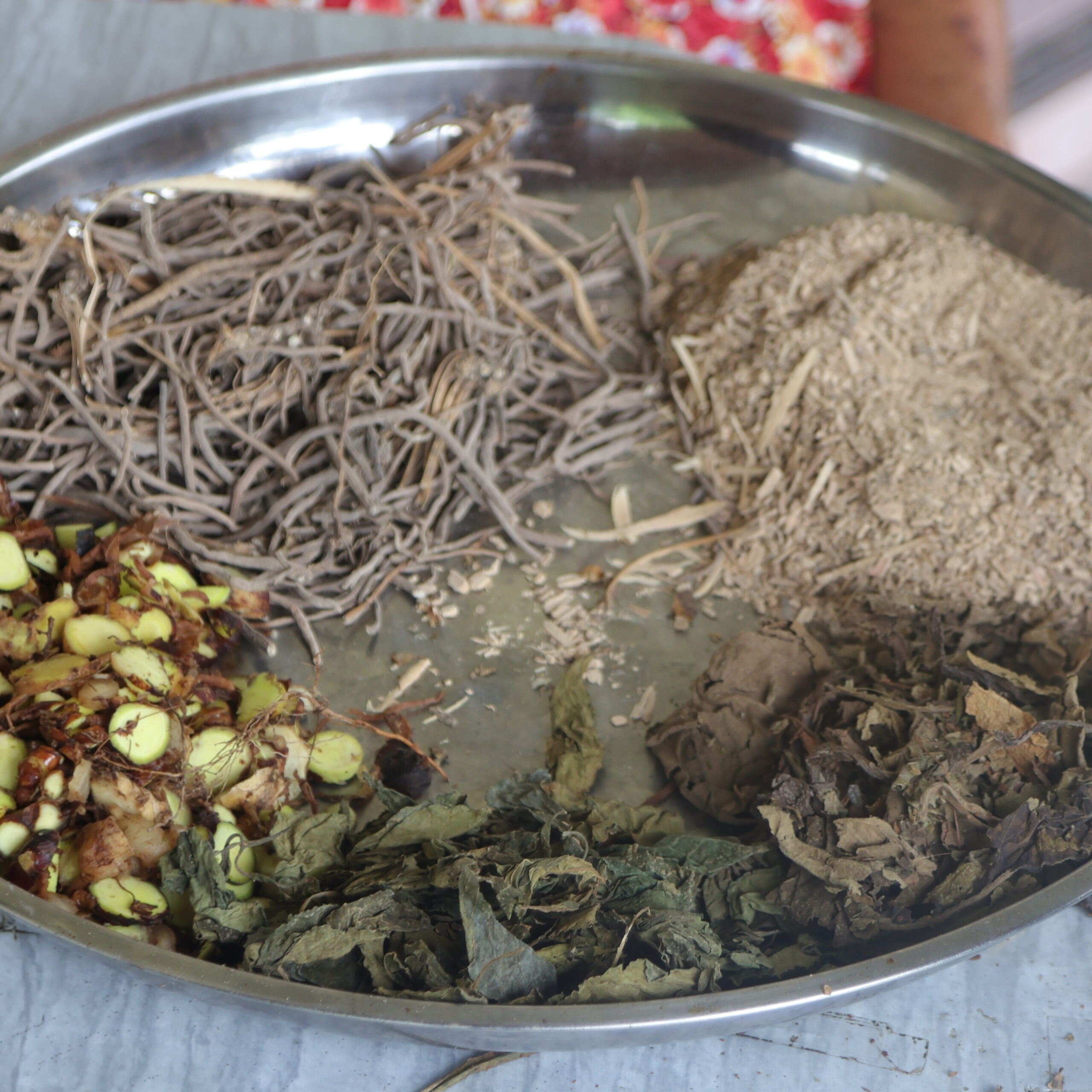
For island families, getting to the city to buy a bottle of baby powder wasn’t easy. So they made their own. The base was rice, mixed with seven kinds of local herbs, all of them known for their cooling properties. Islanders called it luk-on, meaning “newborn,” because it was dusted on babies who cried from the heat or from irritated skin. It soon became an everyday staple across the island.
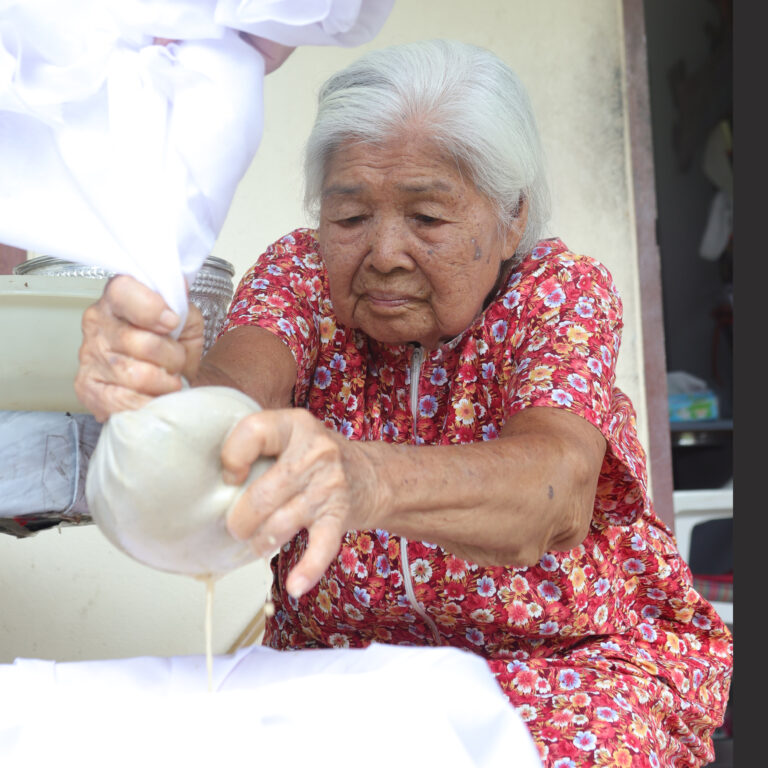
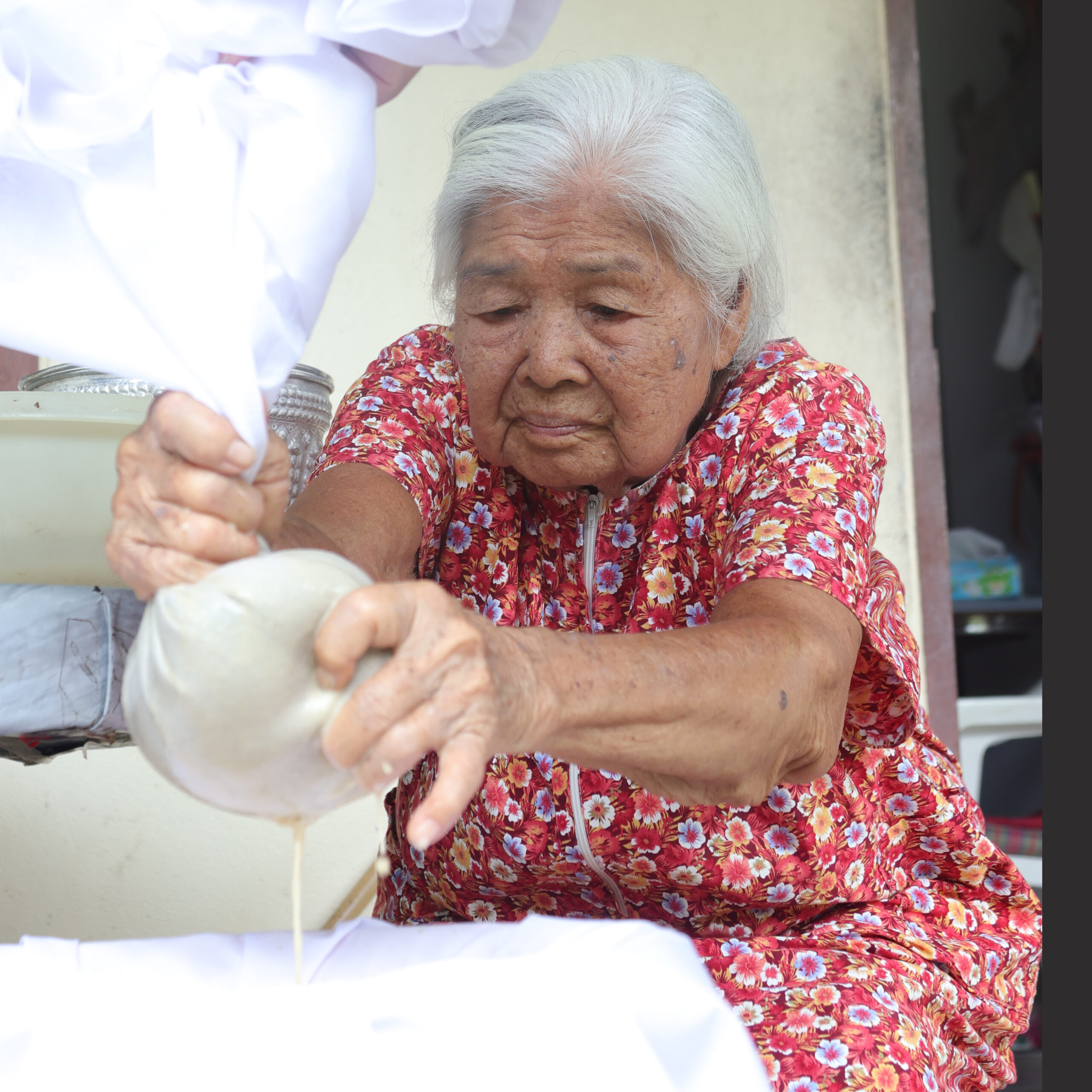
The recipe we are working from belongs to Nee, who has made this powder with her family since she was a young girl. She is now 95, which means the recipe has been made in her family for more than a century. It was never written down. It was measured by experience and taught by doing.
Today, Nee’s family is the only one on Koh Yor still making it. Without documentation, the recipe would disappear with this generation.
What makes it different
It belongs to one place. This isn’t a generic “herbal mask.” The recipe, the plants and the people behind it all come from one island in Songkhla Lake, and that origin is part of what you’re buying.
Gentle by origin. The recipe was first made for newborns and is built on rice and cooling herbs. Its purpose has always been to cool, calm and comfort the skin, and the SAN Herbal Mask carries that intention into a facial ritual for adults.
Tradition, checked by science. The project includes testing for physical properties, stability and microbiology, along with analysis of active compounds and safety. We’ll also standardise particle size and moisture so the texture is the same every time. The goal is to keep the family’s recipe intact while giving it the consistency a modern product needs.
Two ways to use it.
- The Dry Mask stays close to tradition. It’s a fine powder you mix with water and adjust to the texture you like. It’s easy to store and travel with, and it’s the format we’ll use in workshops.
- The Ready-to-Use Cream Mask is a smooth, no-mix version made for busy days. It comes as an original, unscented formula and a version with a SAN signature scent.
Scent as memory. As with everything we make, scent is part of the story. The SAN version will carry a fragrance drawn from Koh Yor and Songkhla, so the ritual takes you back to the place it came from.
Value that returns to the island. The project trains new inheritors, at least five from Koh Yor and up to ten in total. It also runs knowledge-sharing workshops for at least 30 participants and sources raw materials locally wherever possible. The aim is for the recipe to create income and a reason for the next generation to keep making it.
What’s next
Over the coming year, we’ll document the recipe with the family, develop and test two formulas, and invite at least 100 people to try the mask and share honest feedback before launch. Along the way, we’re developing a Koh Yor Wellness Experience: hands-on paeng luk-on workshops where you can blend your own mask and learn about the herbs that go into it.
The finished SAN Herbal Mask will be available at our Songkhla and Phuket stores and online. We also plan to share it with partner hotels, spas and museums across the South.
We’d like to thank the National Innovation Agency for supporting this work, and above all Nee and her family, who agreed to share what they know.
Follow along on Instagram and Facebook at @San.Songkhla as the project unfolds.